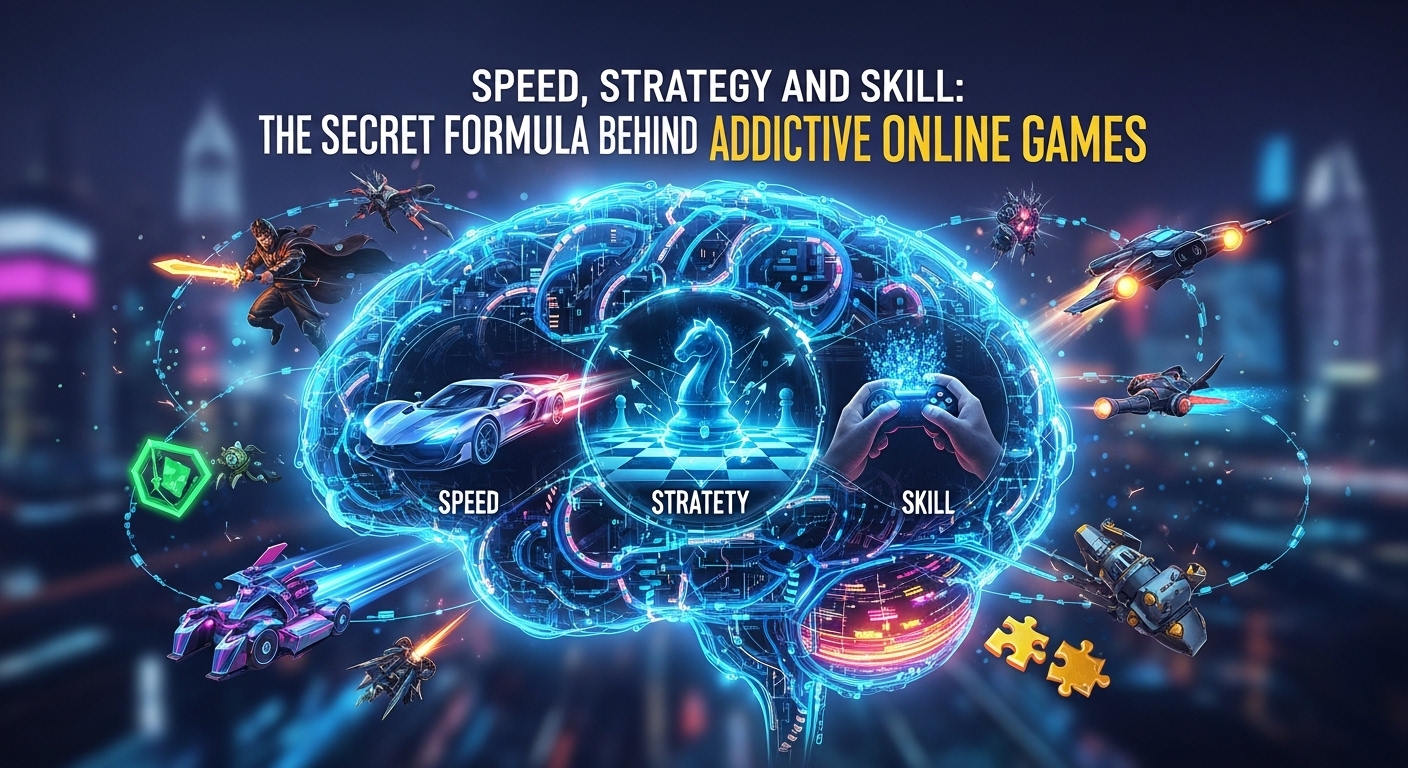
Speed, Strategy and Skill: The Secret Formula Behind Addictive Online Games
By admin •
Nov 07, 2025 • 7899 views
1. The Thrill of the Digital Arena
Every time a player logs into an online game, they step into a digital arena where speed, intelligence, and reflexes collide. Whether it’s a fast-paced shooter or a strategic battle royale, every decision counts. The excitement of competition, combined with instant feedback and visible progress, creates a sense of adrenaline-fueled engagement. This thrill keeps players coming back—not because they have to, but because every round offers a new opportunity to test themselves and improve. It’s this emotional charge that forms the first layer of gaming addiction.
2. The Science Behind Speed and Reaction
Speed is the heartbeat of most online games. Fast reflexes can be the difference between victory and defeat. Games like Call of Duty, Valorant, and Fortnite push players to react in milliseconds, training their brains to process information rapidly. Neuroscientists have found that gamers often develop superior visual processing and reaction speeds compared to non-gamers. This quick decision-making ability isn’t just useful in gaming—it translates into real-life benefits like faster cognitive response and better hand-eye coordination.
3. Strategy: The Mind Game Within the Game
While speed gets all the attention, strategy is where true mastery lies. Behind every click and move, there’s planning, prediction, and psychological warfare. Games like League of Legends and Dota 2 reward players who can think multiple steps ahead, anticipate opponents, and adapt to changing conditions. This balance of foresight and improvisation keeps players intellectually invested. It’s not just about reflexes—it’s about outsmarting others in a battle of wits that feels endlessly satisfying.
4. Skill Progression: The Art of Getting Better
The most addictive games are those that reward skill growth over time. Players start as beginners, gradually mastering controls, mechanics, and strategies. Each milestone—whether unlocking a new ability, ranking up, or perfecting a combo—feels earned. This sense of visible improvement releases dopamine, the brain’s “feel-good” chemical. The reward loop motivates players to keep practicing, learning, and competing. Over time, the pursuit of mastery becomes just as enjoyable as winning itself.
5. The Role of Challenge and Reward
Every great game understands the delicate balance between difficulty and reward. If a game is too easy, players get bored; too hard, and they get frustrated. Game developers craft experiences where every challenge feels tough but fair. Overcoming obstacles brings a sense of accomplishment that fuels continued play. This reward system mirrors real life—progress requires effort, and effort leads to satisfaction. It’s this precise equilibrium that keeps gamers in the zone, striving for the next victory.
6. Competition and the Drive to Win
Human beings are naturally competitive, and online games tap into this instinct perfectly. Facing real opponents across the world gives each match a personal edge. Whether it’s ranking on a leaderboard or beating a friend in a one-on-one battle, the desire to prove one’s skill drives engagement. Esports has taken this to another level, turning gaming into a global stage where strategy and precision meet professional athleticism. The drive to win, to be recognized, and to improve pushes players beyond casual entertainment into passionate dedication.
7. Social Bonds and Community Connection
Online games are more than just digital challenges—they’re social spaces. Players connect, collaborate, and compete with others, forming friendships and rivalries that can last years. Multiplayer gaming communities often feel like second homes, where teamwork, communication, and shared experiences build deep connections. This sense of belonging amplifies the game’s addictiveness because players aren’t just playing for themselves—they’re part of something larger. Winning together, strategizing, and even laughing over failures create emotional ties that keep players coming back.
8. The Power of Customization and Identity
Another secret ingredient behind addictive online games is personalization. Players love creating avatars, customizing weapons, and expressing their unique styles. These features give a sense of ownership and identity within the virtual world. Whether it’s designing a unique skin in Fortnite or building a personalized loadout in Call of Duty, customization allows players to express creativity and individuality. This attachment deepens emotional investment, transforming gaming from a pastime into a personal experience.
9. The Dopamine Loop: Why We Keep Playing
The psychology of gaming addiction often revolves around the dopamine loop—the cycle of challenge, reward, and anticipation. Every victory, level-up, or achievement releases a rush of pleasure. But it’s not just success that keeps players engaged—it’s the constant possibility of success. Just like gambling or sports, games keep players hooked by offering unpredictable rewards. The brain loves that uncertainty. Each round might be the one where everything clicks—and that potential keeps players pressing “Play Again.”
10. The Role of Game Design in Addiction
Behind every addictive game lies masterful design. Developers use color psychology, sound cues, and progression systems to guide player behavior. Subtle feedback—like satisfying sound effects when scoring points or smooth animation transitions—creates an immersive rhythm. Levels are structured to give players a sense of accomplishment just as they start to feel challenged. These design techniques make games intuitive, rewarding, and endlessly replayable. The secret isn’t manipulation—it’s understanding human motivation and crafting experiences that tap into our natural desire to grow and succeed.
11. Balancing Fun and Responsibility
While the speed, strategy, and skill formula makes games thrilling, it’s important to acknowledge balance. The same mechanics that create engagement can, if unchecked, lead to overuse or burnout. Healthy gaming means enjoying the mental challenge and social interaction without letting playtime overshadow real-life priorities. Many modern games now include wellness reminders and screen-time limits to encourage balance. When played responsibly, online games can improve reflexes, enhance strategic thinking, and offer joy—not addiction, but mindful engagement.
Conclusion
The secret formula behind addictive online games lies in the perfect mix of speed, strategy, and skill. These games challenge the body and mind, rewarding persistence, creativity, and focus. They bring together millions of players across the globe, connecting them through competition and collaboration. At their best, they represent not just escapism, but mastery—the pursuit of excellence in digital form. When enjoyed with balance, online gaming isn’t just a habit; it’s a powerful expression of human curiosity, ambition, and the timeless desire to test our limits.