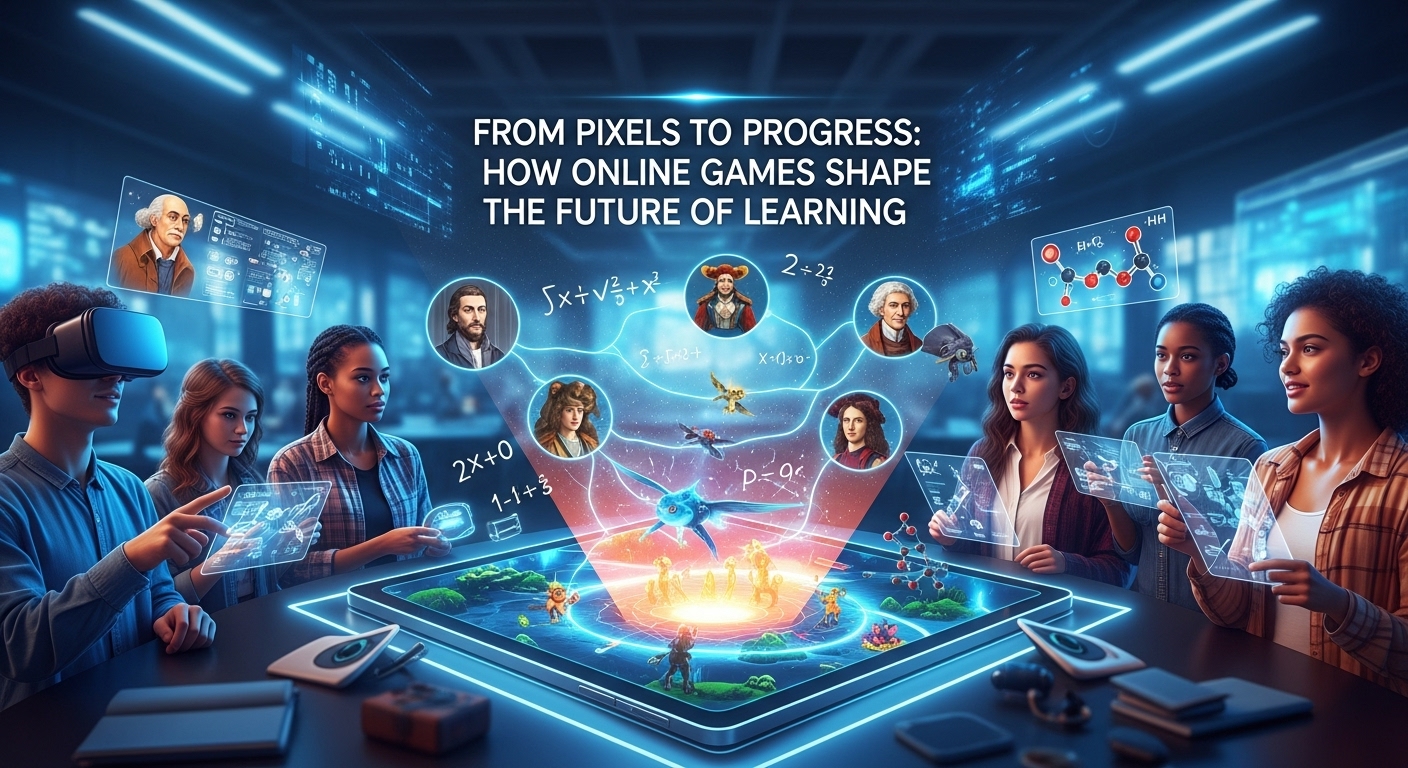
From Pixels to Progress: How Online Games Shape the Future of Learning
By admin •
Nov 07, 2025 • 9490 views
1. The Rise of Game-Based Learning
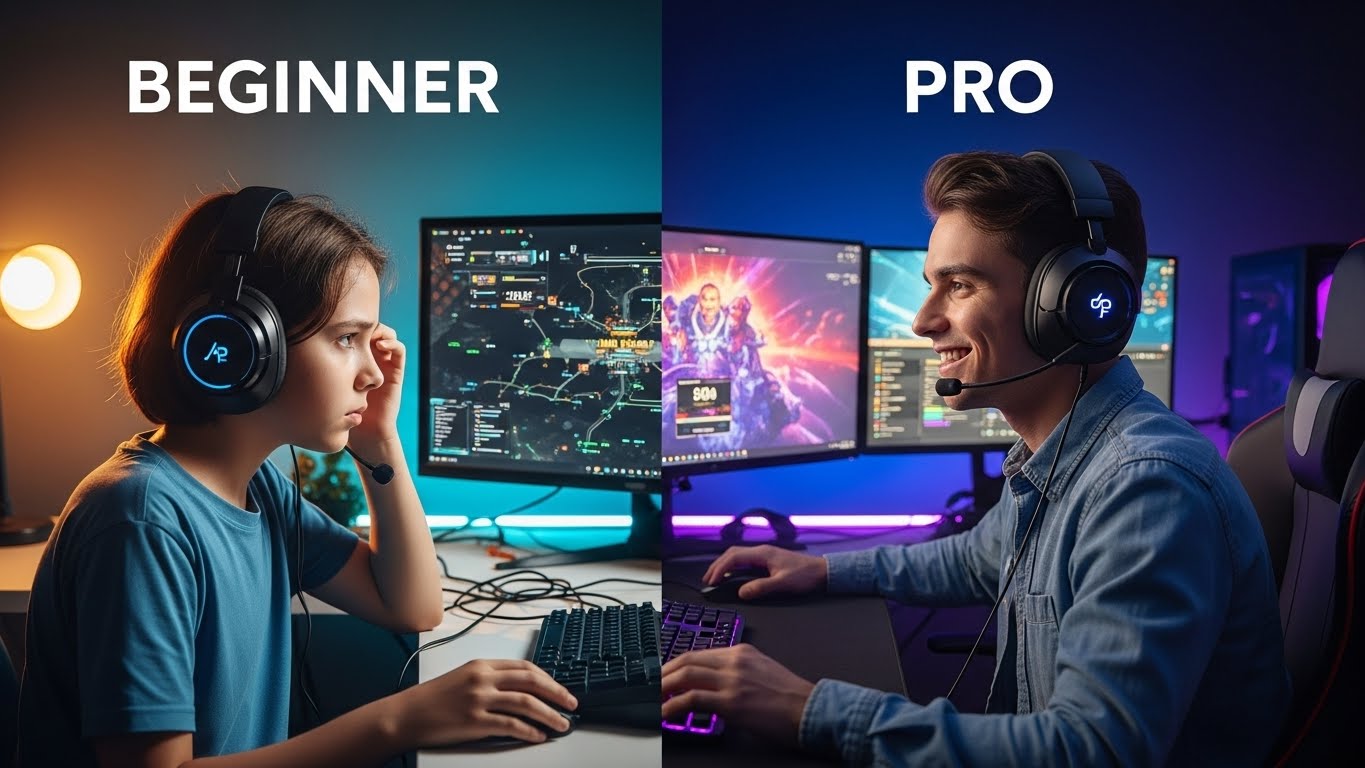
Over the past decade, the educational landscape has experienced a digital revolution — and online games are at the center of it. Game-based learning uses the principles of gaming—challenge, reward, and progression—to teach real-world concepts in a more interactive way. Unlike traditional learning methods that rely on memorization, games engage students emotionally and mentally. Whether it’s a math puzzle game or a historical simulation, students learn by doing, not just reading, which makes learning more meaningful and lasting.
2. How Games Turn Learning into Adventure
What makes games powerful learning tools is their ability to transform lessons into adventures. Instead of passively listening to lectures, students become active participants in dynamic stories and missions. Games like Minecraft Education Edition or Kerbal Space Program allow learners to explore scientific concepts, experiment with physics, and build virtual models of their ideas. This sense of adventure fuels curiosity and makes even complex subjects enjoyable to explore. Learning feels less like a chore and more like a personal journey of discovery.
3. The Psychology of Engagement
Online games are designed to keep players engaged, and the same psychological principles can revolutionize education. Features like progress bars, rewards, and challenges activate the brain’s dopamine system, creating a sense of motivation and accomplishment. When these mechanics are applied to learning, students are more likely to stay focused and driven. Instead of fearing failure, they embrace it as part of the process—retrying levels until they succeed. This builds resilience and helps students understand that persistence leads to progress, not just in games but in real life.
4. Boosting Critical Thinking and Problem-Solving Skills
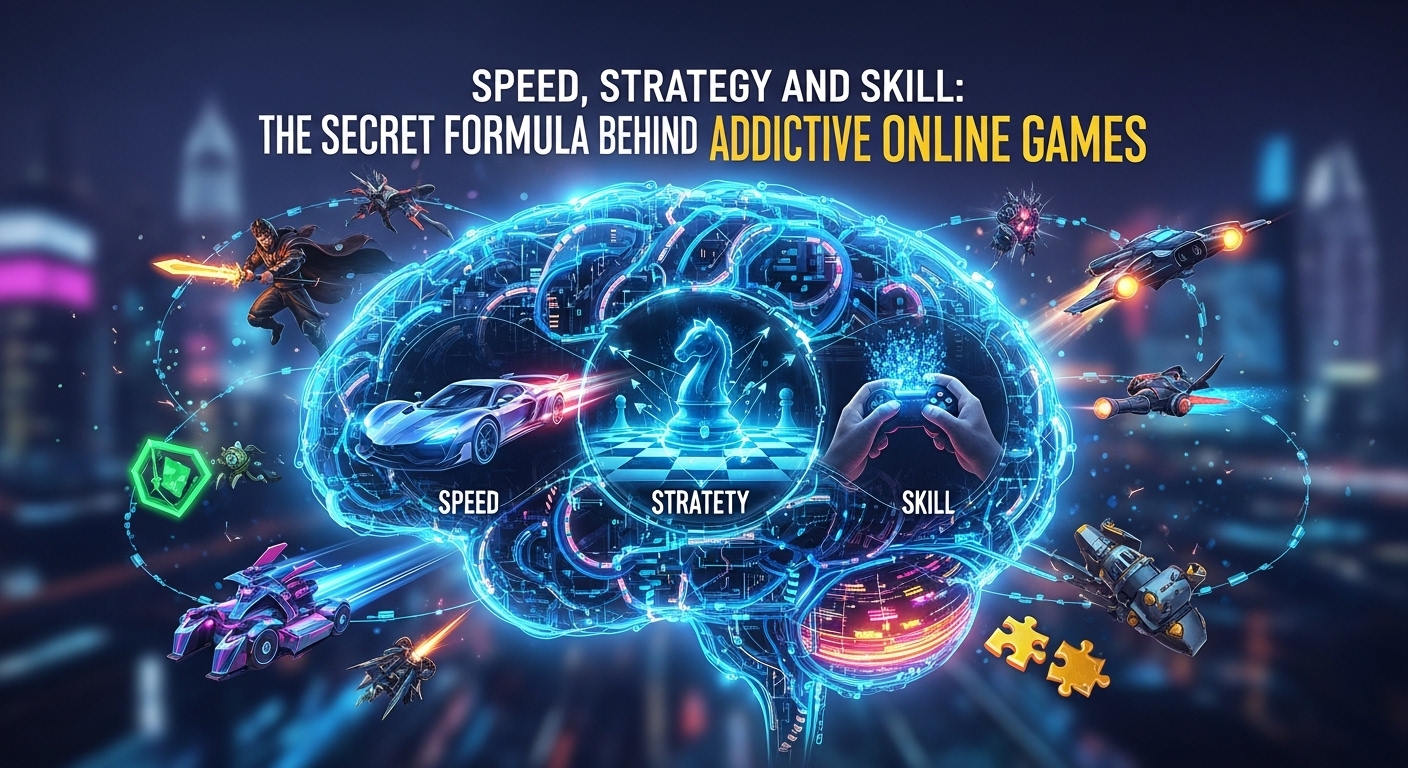
Games require constant analysis, decision-making, and strategy—skills that are essential for academic and professional success. In problem-solving games, players must assess situations, test solutions, and adapt quickly to new challenges. This mirrors real-world learning far more effectively than memorization-based study. For example, puzzle and simulation games encourage logical reasoning and hypothesis testing, while strategy games teach resource management and foresight. By playing, learners develop the mental flexibility needed to solve modern-world problems creatively.
5. Collaboration and Communication Through Play
Many online games are built around teamwork. Multiplayer platforms encourage communication, leadership, and collaboration—all key skills for both education and future careers. Students learn how to coordinate with teammates, divide tasks, and achieve shared goals. In educational environments, collaborative games foster social learning where students help each other understand concepts. This social engagement strengthens empathy and group problem-solving skills, preparing learners for team-oriented work in the digital workplace.
6. Personalized Learning in Virtual Worlds
Every player’s journey in a game is unique—and that’s the beauty of personalized learning. Online games can adapt difficulty levels and challenges based on an individual’s pace and performance. This means no learner is left behind or held back. Educational platforms inspired by gaming, like Kahoot! or Prodigy Math, tailor lessons to each student’s progress. This level of personalization is something traditional classrooms struggle to achieve, making gaming a game-changer (literally) for inclusive and adaptive education.
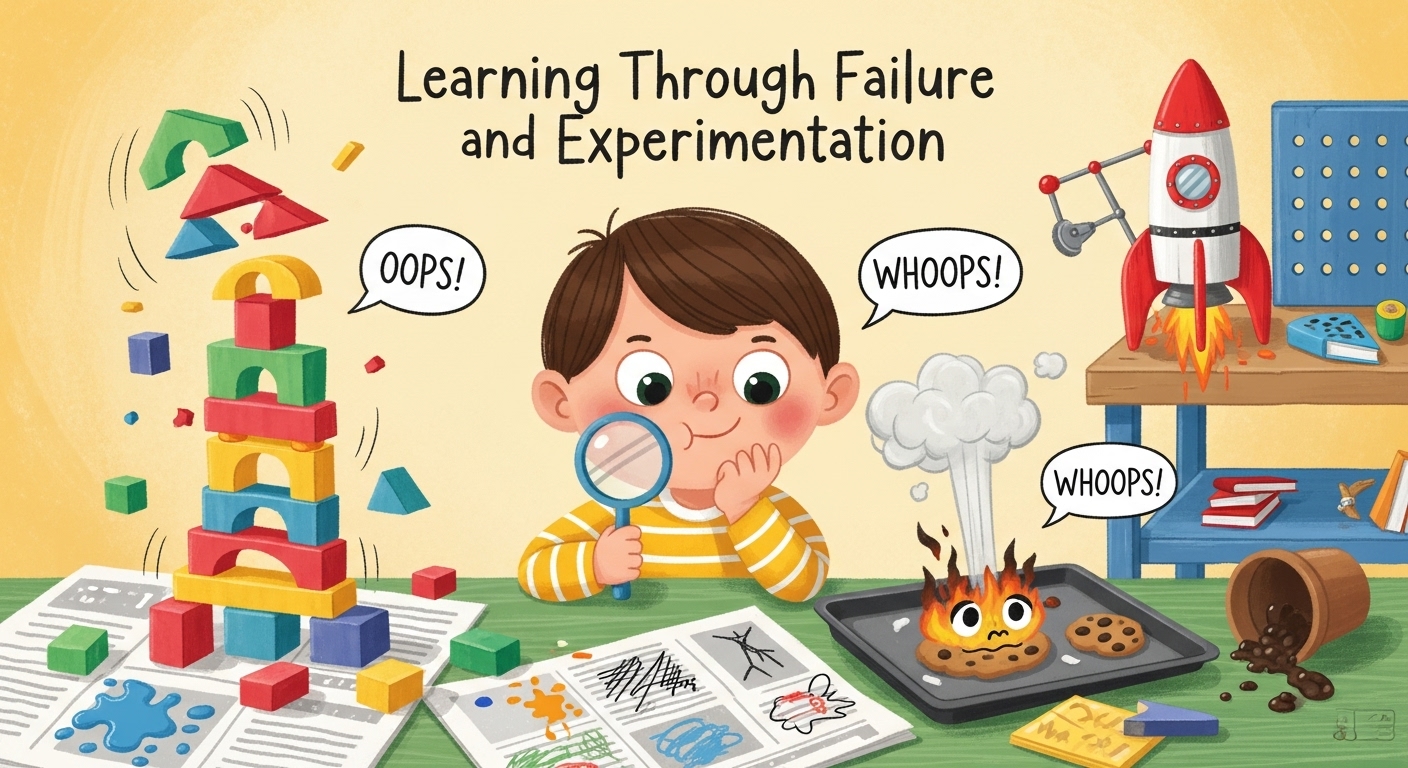
7. Learning Through Failure and Experimentation
In school, mistakes are often seen as setbacks. In games, they are essential parts of progress. Players learn through trial and error—testing strategies, making adjustments, and improving each time they fail. This mindset encourages experimentation and risk-taking, which are crucial for innovation and learning. When applied to education, this approach teaches students that failure isn’t final; it’s feedback. It transforms how they approach challenges both inside and outside the classroom, fostering lifelong learners with growth mindsets.
8. Real-World Applications of Game Mechanics
Gamification is already making its way into classrooms and corporate training programs. Teachers use badges, leaderboards, and achievement systems to make learning more interactive and competitive in a healthy way. For example, completing assignments can earn digital rewards or unlock new “levels” of difficulty. These methods motivate students to engage more deeply with their studies. The same principles are now used in professional settings to train employees, improve productivity, and encourage continuous skill development.
9. Building Creativity Through Play
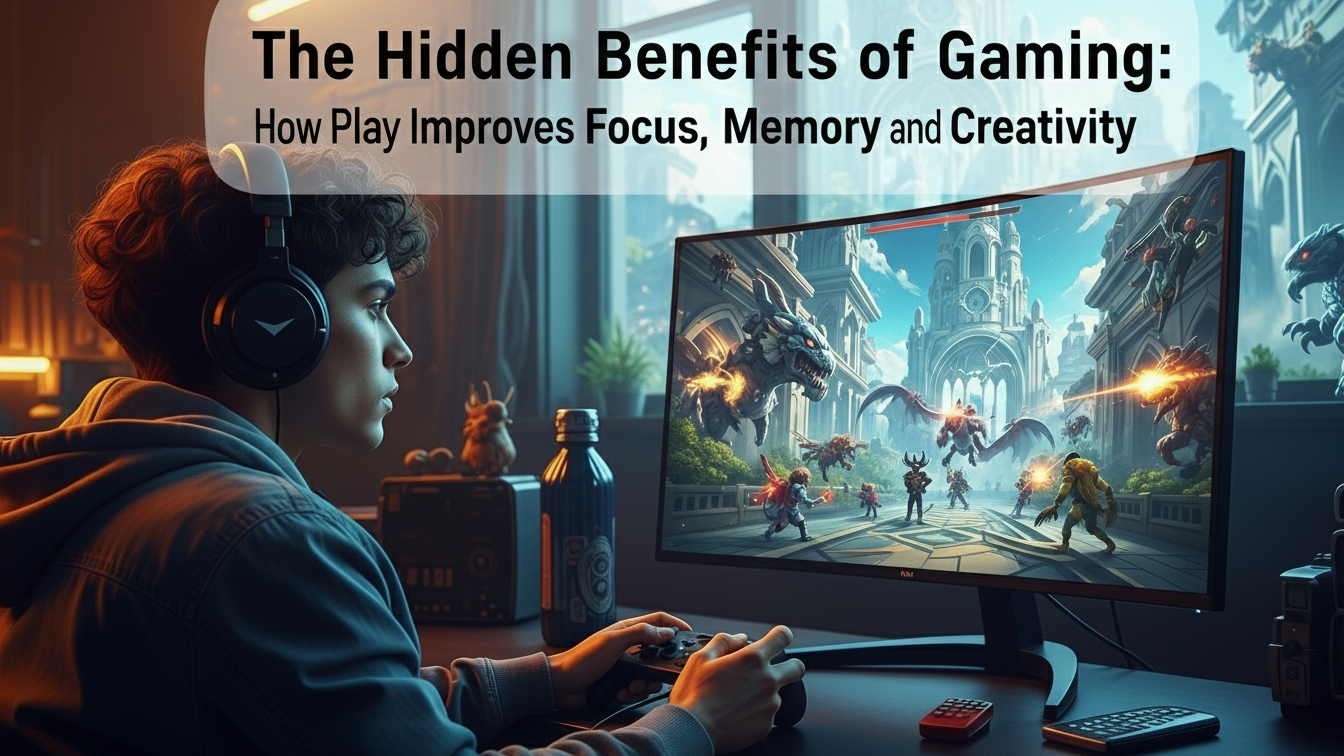
Online games are natural creativity boosters. Sandbox-style games, where players create worlds, structures, or stories, help nurture imagination and innovation. Students who design game environments or characters are also developing skills in art, design, storytelling, and coding. Games like Roblox Studio and LittleBigPlanet inspire young creators to think outside the box and express themselves digitally. In education, this kind of creativity translates into stronger critical thinking and a passion for exploring new ideas.
10. The Technological Bridge to Future Education
As virtual reality (VR) and augmented reality (AR) continue to grow, the boundary between gaming and learning is fading fast. Imagine exploring ancient Rome in VR or performing virtual science experiments safely at home. These immersive experiences create emotional and sensory connections that make information unforgettable. Educational institutions are already adopting gamified virtual classrooms where students learn history, geography, or biology through interactive simulations. The future of learning will be immersive, engaging, and deeply connected to the digital gaming experience.
11. From Playtime to Lifelong Learning
Perhaps the most profound impact of online gaming on education is how it reshapes our attitude toward learning itself. Games teach players to stay curious, to explore, and to never stop improving. This same spirit defines lifelong learners—people who seek knowledge continuously, not because they have to, but because they love the process. As education systems worldwide adapt to the digital era, integrating gaming principles will make learning not only more effective but also more enjoyable for generations to come.
Conclusion
Online games have transcended their entertainment roots to become powerful educational tools. They teach focus, creativity, problem-solving, collaboration, and emotional resilience—skills that traditional education alone cannot fully provide. By merging technology, psychology, and interactivity, gaming transforms learning into an experience rather than a task. The future classroom will not be bound by walls or chalkboards but will exist in vibrant virtual worlds where curiosity drives progress. From pixels to progress, the journey of learning has only just begun.